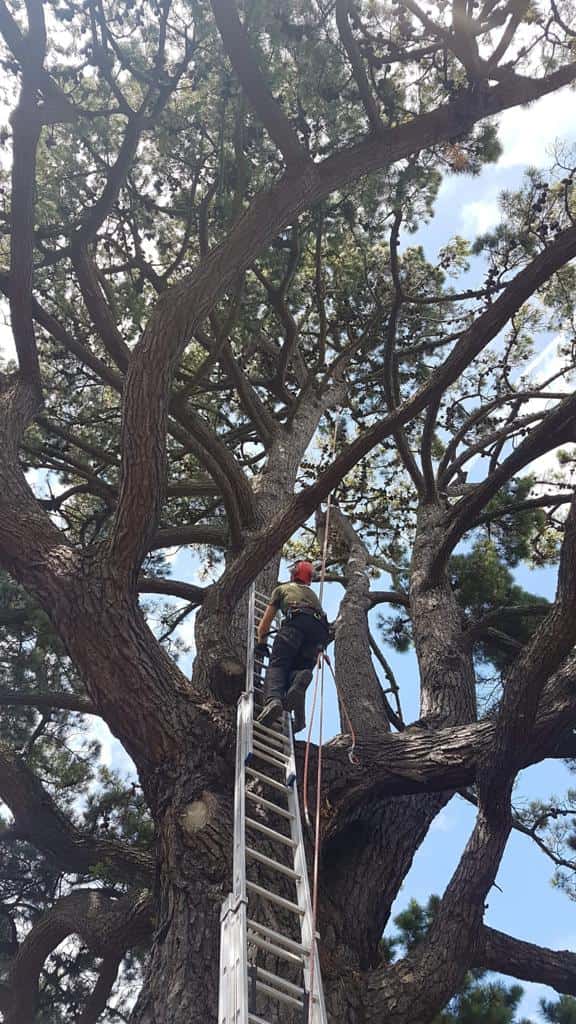
Large, mature trees can be an attractive and valuable feature within a garden, providing structure, shade and a strong natural presence. It is also perfectly normal for established trees to develop substantial branches that extend over lawns, patios, paths and other parts of an outdoor space. The size of a branch alone does not necessarily mean that it is unsafe or needs to be removed.
However, large branches deserve attention when their condition begins to change. Deadwood, cracks, damaged branch unions, excessive movement or previous branch failure can all provide reasons for closer assessment. For property owners in Bottisham, Cambridge, understanding these warning signs can help distinguish between a healthy mature branch and one that may benefit from professional tree surgery.
When Do Large Overhanging Branches Need Professional Attention?
The position of a large branch can naturally make it seem concerning, particularly when it extends above a frequently used section of the garden. However, professional assessment should focus on condition and structure rather than size alone.
A large branch with healthy growth and a strong attachment can be very different from one containing extensive deadwood, cracking or visible deterioration. Looking at the complete tree also matters because problems within the trunk, crown or root system can influence individual branches.
Large Branches Are Not Automatically a Problem
Mature trees naturally carry substantial limbs.
These branches form part of the tree’s established structure and should not be removed simply because they have become large.
Unnecessary removal of major healthy branches can significantly alter the crown. Tree surgery should therefore have a clear objective, such as managing identifiable defects, removing deadwood or improving an unsuitable branch structure.
Professional assessment helps determine whether intervention is genuinely required.
The Condition of the Branch Matters More Than Its Size
A thick branch can appear more concerning than a smaller one because of its obvious weight.
However, dimensions alone do not reveal structural condition.
A substantial branch with healthy wood and an appropriate connection to the tree may not require intervention, while a smaller branch containing significant deterioration could deserve attention.
This is why visual impressions should be supported by a proper assessment of the branch and its attachment.
Dead Branches Deserve Closer Attention
Deadwood is one of the more recognisable reasons for assessing branches above a garden.
Once a branch has died, it no longer produces new living growth. Over time, the wood can dry and become increasingly brittle.
Smaller twigs may begin falling first, while larger sections can remain attached for longer.
Where substantial dead branches are positioned over regularly used garden areas, professional deadwood assessment can determine whether removal is appropriate.
A Dead Branch Does Not Mean the Whole Tree Is Dead
It is important to distinguish between individual deadwood and complete tree decline.
Healthy trees can develop isolated dead branches for numerous reasons while the remainder of the crown continues growing normally.
In these circumstances, selective deadwood removal may be appropriate.
This allows the affected branch material to be addressed without carrying out unnecessary work to healthy sections of the tree.
Sparse or Missing Foliage Can Provide a Useful Clue
During the normal growing period, differences in foliage can sometimes help identify branch decline.
A large branch with substantially less foliage than neighbouring sections may deserve closer inspection.
However, foliage alone should not be used to diagnose a structural problem.
The branch may be experiencing localised decline, or its growth pattern may have another explanation. Professional assessment considers foliage alongside the condition of the wood, branch union and wider crown.
Cracks Along a Large Branch Should Be Assessed
Visible cracks can be important structural warning signs.
They may develop along the branch itself or close to where it joins another substantial limb or the main trunk.
The significance depends on the size, position and direction of the crack, together with the surrounding wood.
A crack does not automatically mean that complete branch removal is required, but it provides a clear reason for professional assessment.
Splitting at a Branch Union Can Be Significant
The point where a major branch connects to the rest of the tree carries substantial forces.
Where visible separation begins developing at this junction, the structural relationship between the branch and tree needs to be understood.
Some branch unions are naturally strong, while others can contain features that make them more susceptible to failure.
Where a large limb above a garden shows visible splitting at its attachment, it should not simply be monitored from a distance without understanding its condition.
Weak Branch Unions May Be Difficult to Recognise
Not every structural concern is immediately obvious from ground level.
A branch can have dense foliage and appear healthy while its attachment contains features requiring closer inspection.
This is particularly relevant where several large stems or branches meet within a relatively confined section of the crown.
Professional tree assessment looks beyond foliage and considers how the main structural parts of the tree are connected.
Hanging Branches Need Professional Attention
A branch can break without falling completely to the ground.
It may become caught within neighbouring branches and remain suspended in the crown.
From below, the broken section can sometimes appear securely supported even though its position has changed substantially.
Hanging branches should be professionally assessed because their remaining support can be difficult to determine accurately from ground level.
Previous Branch Failure Can Reveal Useful Information
If a tree has previously lost a substantial limb, it can be useful to investigate why.
The failure may have resulted from an isolated defect, meaning the remaining crown is otherwise satisfactory.
Alternatively, neighbouring branches may contain similar structural characteristics.
A professional tree surgeon can examine the remaining branch unions and overall crown rather than assuming that previous failure means every large branch requires removal.
Branches That Have Recently Changed Position Deserve Attention
Mature branches naturally move in the wind, but their resting position should generally remain relatively consistent.
A substantial branch that appears noticeably lower than before may have changed structurally.
This can sometimes follow cracking or partial failure within the branch or its attachment.
A new change in position is therefore more informative than the fact that a branch has always grown horizontally or at a particular angle.
Excessive Movement Can Indicate a Problem
Trees need flexibility.
Branches moving in windy conditions is normal and forms part of how a tree responds to environmental forces.
The concern is unusual movement that differs from neighbouring branches or represents a clear change from the branch’s previous behaviour.
Where a substantial limb appears to be moving independently around a damaged union, professional assessment can help establish why.
Strong Winds Can Expose Existing Weaknesses
Wind can reveal problems that were already developing within a tree.
A weakened branch union or partially deteriorated limb may become more noticeable following windy conditions, even if the branch remains attached.
Changes worth looking for include new cracks, hanging material, unusual branch positions and recently exposed wood.
The objective is not to assume that every tree needs pruning after windy weather, but to recognise genuine changes when they occur.
Broken Branches Should Be Assessed Beyond the Visible Damage
When part of a large branch breaks away, attention naturally focuses on the missing section.
However, the remaining branch and the point of failure also matter.
Splintered or damaged wood may remain, while connected sections can sometimes have been affected by the same event.
Professional tree surgery can assess what remains and determine whether selective pruning is appropriate.
Cavities Need to Be Considered in Context
Hollows or cavities can develop within trees without necessarily requiring major branch removal.
Their significance depends on where they are positioned and how much sound wood remains around the affected section.
A cavity near a substantial branch union may deserve particular assessment because of the forces passing through that part of the tree.
The presence of a hollow should therefore be considered alongside the branch’s complete structure rather than treated as an automatic reason for removal.
Fungal Growth Can Be a Reason for Further Assessment
Fungal growth on a large branch, trunk or major union can sometimes provide useful information about changes within the tree.
Its significance varies and should not be judged from appearance alone.
Where unusual growth appears alongside deadwood, cracking or structural changes, professional assessment can help establish whether the branch requires management.
The complete condition of the tree remains more important than any one visible feature.
Branches Over Patios and Seating Areas Can Attract More Attention
Large branches above frequently used sections of a garden naturally cause greater concern than those extending into open areas.
Their position does not necessarily make them structurally defective.
However, where signs of deterioration are present, the location becomes relevant when deciding how the tree should be managed.
A branch above a seating area, path or other regularly occupied space deserves appropriate assessment if its condition has noticeably changed.
Overhanging a Driveway Does Not Automatically Mean Removal Is Needed
A mature tree may naturally extend branches over a driveway without presenting an obvious structural problem.
Removing healthy branches purely because they cross above an access area may not always be appropriate.
Where there is substantial deadwood, cracking or another identifiable defect, selective tree surgery can be considered according to the actual condition.
The objective should be proportionate management rather than unnecessary removal of healthy growth.
Low Branches Can Affect How a Garden Is Used
Structural condition is not the only reason large branches may require management.
A healthy branch can sometimes extend sufficiently low to interfere with normal use of a garden, path or other outdoor space.
In suitable circumstances, carefully planned pruning may improve clearance while retaining the tree’s overall form.
The amount and position of pruning should be determined by the individual tree rather than simply cutting back every branch extending into the space.
An Overextended Branch May Benefit From Assessment
Some branches develop considerable length away from the main trunk.
Whether this is problematic depends on the branch’s dimensions, attachment, growth pattern and surrounding crown.
An extended branch should not automatically be shortened simply because it appears large.
Where its structure raises concerns, professional assessment can determine whether selective reduction would be beneficial and how much work is appropriate.
Crown Weight Needs to Be Considered Carefully
The distribution of branches throughout the crown influences the overall form of a tree.
Where one side has developed substantially more growth, the crown can appear unbalanced.
This does not necessarily mean that large branches need removing.
Appropriate crown management requires an understanding of how pruning will affect the remaining structure, which is why indiscriminate cutting can be counterproductive.
Crown Reduction May Be Appropriate for Some Trees
Crown reduction involves selectively reducing the dimensions of the crown while maintaining an appropriate natural form.
It can be useful in particular circumstances where overall crown size or branch loading requires management.
The work should be carefully planned.
Excessive pruning can unnecessarily alter the tree, so the objective should be to carry out only the amount of reduction that the individual situation requires.
Selective Branch Reduction Can Sometimes Be Enough
A concern involving one substantial branch does not necessarily require major work throughout the complete crown.
Where appropriate, selective reduction may help manage the dimensions or loading of a particular limb.
The suitability of this approach depends on the tree species, branch structure and reason for intervention.
Professional tree surgery aims to retain suitable growth while addressing the specific concern identified during assessment.
Deadwood Removal Can Preserve the Healthy Crown
Where the primary concern is dead branches, selective deadwood removal can often address the problem without substantially changing healthy sections of the tree.
This is particularly useful in mature trees where most of the crown remains in good condition.
The work focuses on clearly dead material rather than reducing the entire tree unnecessarily.
A condition-led approach helps preserve the established character of the tree while managing the affected branches.
Not Every Large Tree Needs Regular Heavy Pruning
The size of a tree should not automatically determine the amount of tree surgery it receives.
A large, healthy tree with a suitable structure may require relatively little intervention.
Heavy pruning carried out simply because the tree is mature can remove substantial healthy growth without addressing a specific problem.
Tree surgery is most valuable when there is a clear reason for the work and the pruning method is matched to that objective.
Repeatedly Cutting Back the Same Branches May Need Reconsideration
Where the same parts of a tree require frequent attention, it can be useful to review the overall management approach.
Repeated pruning may be necessary in some circumstances, but continually responding to regrowth without considering the complete crown can produce inconsistent results.
Professional assessment can determine whether a different pruning strategy would provide a more appropriate long-term structure.
The Condition of the Main Trunk Also Matters
Large branches cannot be assessed entirely separately from the tree supporting them.
Cracks, cavities, deterioration or other changes within the main trunk can influence how the complete crown is viewed.
A branch may appear healthy while concerns elsewhere within the tree alter the overall assessment.
For this reason, professional tree surgery normally considers the complete structure rather than examining only the branch directly above the garden.
Root Condition Can Influence the Whole Tree
The root system anchors and supports the entire tree.
Where visible movement occurs around the base, the significance extends beyond individual branches.
A changing lean, lifted soil or obvious root deterioration can provide reasons for broader tree assessment.
Pruning one large branch would not necessarily address a problem originating from overall tree instability, making accurate diagnosis particularly important.
A Changing Lean Can Alter the Assessment
Some mature trees naturally grow at an angle and remain stable for many years.
A tree that has recently started leaning or appears to be changing position presents a different situation.
Where a developing lean is combined with large branches extending above frequently used garden areas, the complete tree should be assessed.
The issue may involve overall stability rather than simply the condition of one overhanging limb.
Warning Signs to Look for in Large Overhanging Branches
Professional assessment is worth considering if you notice:
- substantial dead branches above the garden;
- cracks along a major limb;
- splitting around a branch union;
- hanging or partially detached branches;
- a large branch that has recently dropped lower;
- fresh exposed wood where part of a branch has failed;
- unusual movement around a major branch attachment;
- significant crown dieback;
- repeated failure of branches from the same tree;
- several structural warning signs appearing together.
These signs do not automatically mean that a branch needs complete removal. They indicate that its condition should be understood before deciding what work is appropriate.
Avoid Judging Branch Condition From the Ground Alone
Some obvious defects can be recognised from a suitable position at ground level, but large tree crowns can conceal important details.
Dense foliage may obscure cracks, deadwood and damaged unions.
Distance can also make a partially broken branch appear normally attached.
Professional tree surgeons can assess the structure more systematically and determine whether closer inspection or tree surgery is required.
Avoid Removing Large Branches Without a Clear Plan
Large branch removal can substantially change a tree.
It can alter crown shape, remove significant living material and affect how the remaining branches are distributed.
For this reason, major pruning should have a defined purpose.
Where only one section is defective, targeted work may be more appropriate than extensive cutting throughout an otherwise healthy crown.
Tree Felling Is Not Automatically Necessary
Concern about large branches does not mean that the entire tree needs removing.
Many issues can be addressed through deadwood removal, selective pruning or appropriate crown management while retaining the tree.
Felling becomes relevant only where the condition of the complete tree makes removal the appropriate option.
Professional assessment helps ensure that decisions are based on actual structural condition rather than the intimidating appearance of a large mature tree.
Why Early Assessment Can Be Useful
Tree defects can sometimes be easier to manage when identified before substantial branch failure occurs.
A developing crack, isolated dead branch or changing union can be assessed while the surrounding crown remains intact.
Early assessment can also provide reassurance where a large branch proves to be healthy and structurally suitable.
In either case, understanding the actual condition is more useful than making assumptions based purely on size.
Why Professional Tree Surgery Matters
Large trees require a measured approach to pruning.
The objective is not simply to remove as much growth as possible. Professional tree surgery considers the condition of the branch, how it connects to the tree, the balance of the wider crown and the surroundings beneath it.
This allows the work to be proportionate to the problem.
Healthy growth can be retained where appropriate, while dead, damaged or unsuitable branches can be managed using a method suited to the individual tree.
Professional Tree Surgery in Bottisham, Cambridge
At Bottisham Tree Surgeons, we understand why substantial branches extending above a garden can cause concern, particularly when their condition is difficult to judge from the ground.
Professional assessment can establish whether the branches are healthy parts of a mature tree or whether deadwood, cracking, structural weakness or another issue requires attention. Where tree surgery is appropriate, the work can then be focused on the actual problem rather than removing healthy growth unnecessarily.
For property owners in Bottisham, Cambridge, this condition-led approach can help maintain suitable mature trees while ensuring that developing branch problems are not overlooked.
Conclusion
Large branches above a garden are not automatically a reason for concern. Mature trees naturally develop substantial limbs, and healthy branches with suitable attachments can form part of a stable crown for many years.
Professional attention becomes more important when there are signs of change or deterioration. Deadwood, cracks, splitting at branch unions, hanging branches, previous branch failure or a substantial limb that has recently changed position can all justify closer assessment.
The appropriate response depends on what is actually happening within the tree. Some branches may require no work, while others may benefit from deadwood removal, selective reduction or carefully planned pruning. More extensive intervention should only be considered where the wider condition of the tree supports it.
If you are concerned about large branches above your garden in Bottisham, Cambridge, contact Bottisham Tree Surgeons. We can assess the tree and recommend an appropriate tree surgery approach based on the condition of the branches, the wider crown and the individual requirements of the tree.
Call us on: 01223 912 297
Click here to find out more about Bottisham Tree Surgeons
Click here to complete our contact form and see how we can help with your tree care needs.