Tree felling removes the trunk and crown, but it usually leaves the stump and main root system in the ground. Whether that stump should be removed immediately depends on its position, the tree species and how the surrounding area will be used.
In many cases, arranging stump removal at the same time as felling is the most practical way to complete the work. However, immediate removal is not always essential when the stump is in an unobtrusive location and will not interfere with access, maintenance or future landscaping.
Deciding When a Tree Stump Should Be Removed
A stump should be assessed as part of the original tree-felling plan. Considering its future impact before work begins helps determine whether stump grinding should follow promptly or whether the stump can remain temporarily.
Remove It Promptly if the Area Will Be Reused
Immediate stump removal is generally sensible when the ground is intended for a new lawn, planting bed, path, patio or another landscaping feature. Leaving the stump in place can restrict the layout and make ground preparation more difficult.
Removing it before landscaping begins allows the surface to be cleared, levelled and prepared without working around a solid obstruction. It also reduces the chance of completed landscaping having to be disturbed later.
A Stump Can Obstruct Garden Access
Stumps left close to paths, driveways, gates or regularly used parts of a garden can create an awkward obstacle. Low stumps may become difficult to see once grass or surrounding plants grow around them.
Removal can improve access for lawnmowers, wheelbarrows and garden equipment. It also creates a cleaner transition between different parts of the outdoor space.
Some Trees May Produce New Shoots
Felling the trunk does not always stop growth immediately. Certain tree species can send up new shoots from the stump or remaining roots.
These shoots rarely recreate a well-formed tree without careful management. Instead, they can produce dense, vigorous growth that requires repeated cutting. Prompt stump grinding can reduce the stump’s ability to generate regrowth, although some root systems may still produce shoots for a time.
The tree species should therefore be considered when deciding how quickly removal is needed.
Natural Decay Can Take a Long Time
A stump will eventually break down naturally, but this process can take many years. The rate of decay depends on the tree species, stump size, moisture levels and surrounding conditions.
During this period, the stump may become softer and less stable without disappearing completely. Waiting for natural decomposition is usually only practical when the stump occupies an area that does not need to be used or maintained.
Decaying Wood May Affect the Garden’s Appearance
A freshly cut stump may initially appear tidy, but its appearance changes as the wood dries and deteriorates. Cracks, loose bark and fungal growth may develop as part of the natural decay process.
These changes do not always create an immediate problem, but they may be undesirable in a carefully maintained garden. Grinding the stump below ground level provides a neater finish and allows the area to be reinstated more effectively.
Stump Removal Can Be Easier During the Same Project
When stump removal is planned alongside tree felling, access requirements and equipment can be considered from the outset. The working area may already be clear, and the stump’s exact position and condition are known.
If removal is postponed, new planting, fencing or other garden features may later restrict access. Planning both stages together can therefore make the overall operation more straightforward, even if grinding is completed separately from the felling itself.
Immediate Removal Is Not Always Necessary
A stump may be left temporarily when it is positioned in an unused boundary area, does not obstruct access and will not interfere with planned work. Some property owners may also choose to incorporate a stable stump into a natural garden design.
Leaving it in place should still be an informed decision. Consider whether it could:
- Produce unwanted regrowth
- Obstruct mowing or maintenance
- Interfere with future planting
- Limit access through the garden
- Become concealed by vegetation
- Delay planned landscaping
If these issues are unlikely, removal may not need to happen immediately.
Stump Grinding and Full Root Removal Are Different
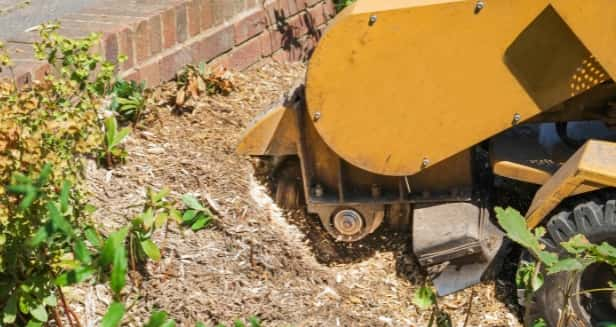
Stump grinding uses specialist machinery to reduce the visible stump and upper roots into small wood fragments. The remaining root system is normally left below ground, where it gradually decomposes.
Full root removal involves excavating a much larger area and disturbing more soil. It may be considered when major groundworks require the root system to be cleared, but it is not necessary for every garden stump.
A professional assessment can determine the appropriate approach based on the stump’s size, location and the intended use of the land.
The Surrounding Area Needs Careful Assessment
Before grinding begins, the stump’s proximity to structures, fencing, surfaces and underground obstructions must be considered. Restricted access can also affect which machinery can reach the site.
The stump height, diameter and root flare help determine the scale of the work. Assessing these factors in advance allows the stump to be removed methodically while limiting unnecessary disturbance to the surrounding garden.
Plan How the Ground Will Be Used Afterwards
Stump grinding leaves a mixture of soil and wood fragments within the resulting hollow. Some material can be removed and the area filled, depending on its intended use.
Where the ground will be planted or turfed, preparation should account for possible settlement as the remaining roots decay. Planning the final surface at the removal stage helps create a more practical result.
Conclusion
A stump does not always need to be removed immediately after tree felling, but prompt removal is often advisable when the area will be landscaped, regularly maintained or used for access. It can also help control regrowth and prevent the stump from becoming a long-term obstruction.
Bottisham Tree Surgeons provides professional tree felling and stump grinding services in Bottisham, Cambridge. If you are planning to remove a tree, contact us to discuss whether the stump should be dealt with during the same project.
Call us on: 01223 912 297
Click here to find out more about Bottisham Tree Surgeons
Click here to complete our contact form and see how we can help with your tree care needs.